
A good dehumidifier can make a major difference to condensation, damp rooms and slow-drying laundry — but the right model depends heavily on room size, temperature and how much moisture you need to remove.
We compared current UK models using extraction capacity, compressor versus desiccant technology, noise, energy use, laundry performance, tank size, drainage options, smart controls, warranty/support, current pricing and independent owner and expert feedback.
Below are seven models that stand out for different types of UK household.
Some links on this page are affiliate links. If you buy through one of these links, Buyers Guide UK may earn a commission at no extra cost to you.
Quick comparison
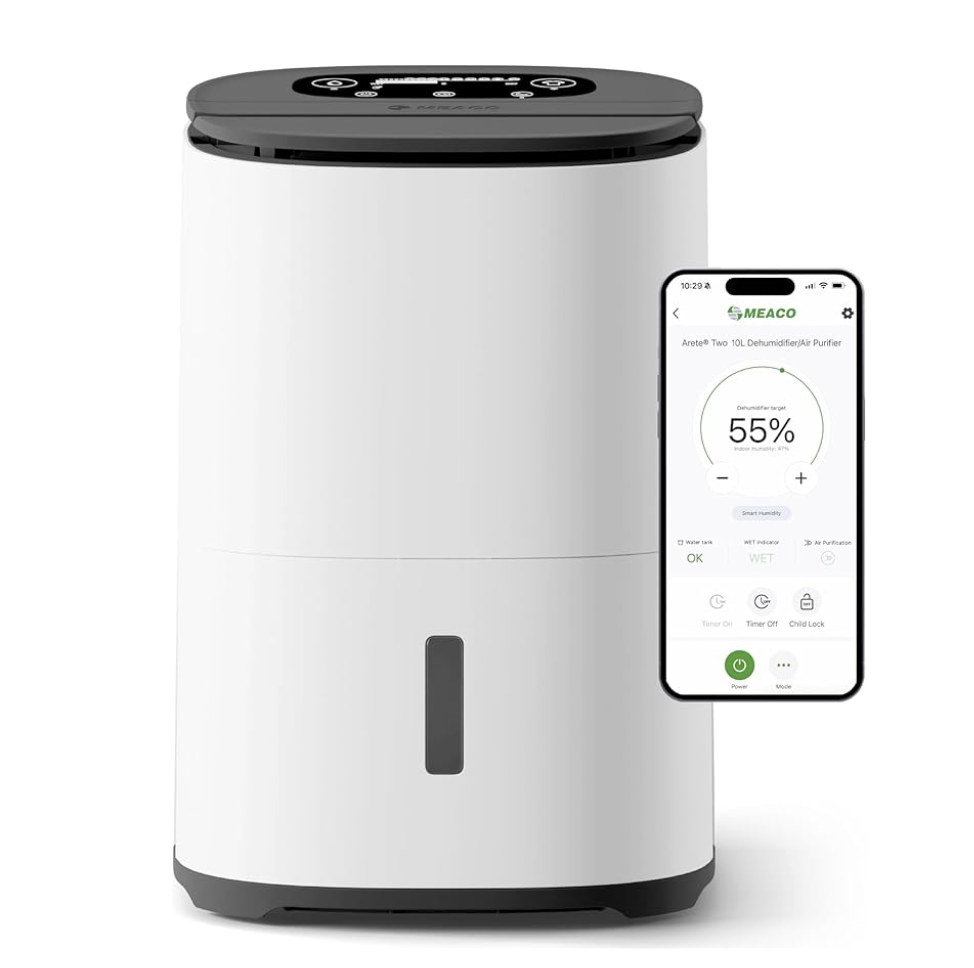 MeacoDry Arete One 20L
- Best for:
- Best Overall
- Key strength:
- Quiet, efficient whole-home performance
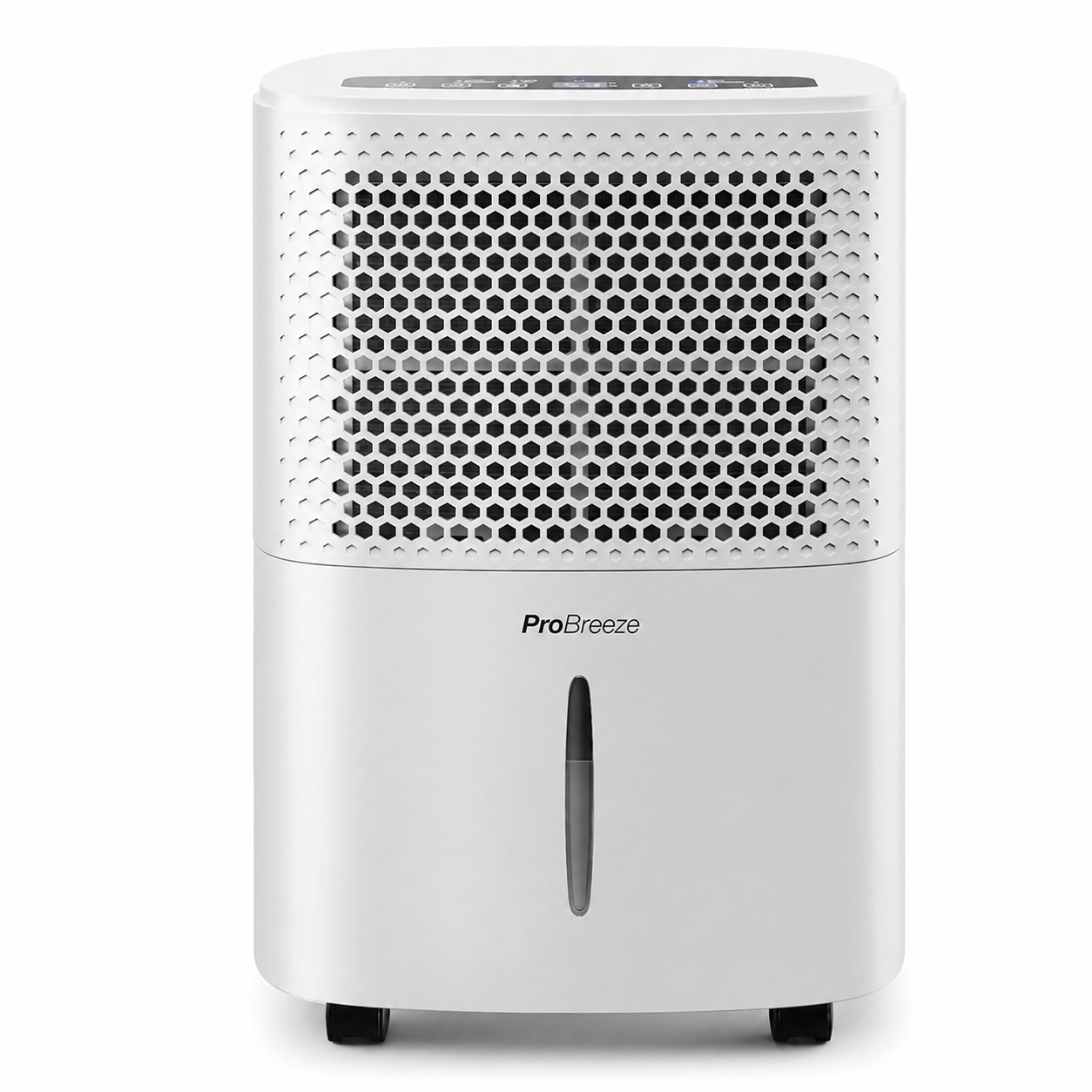 Pro Breeze 12L Low Energy PB-06-UK
- Best for:
- Best Value
- Key strength:
- Strong everyday performance at a lower price
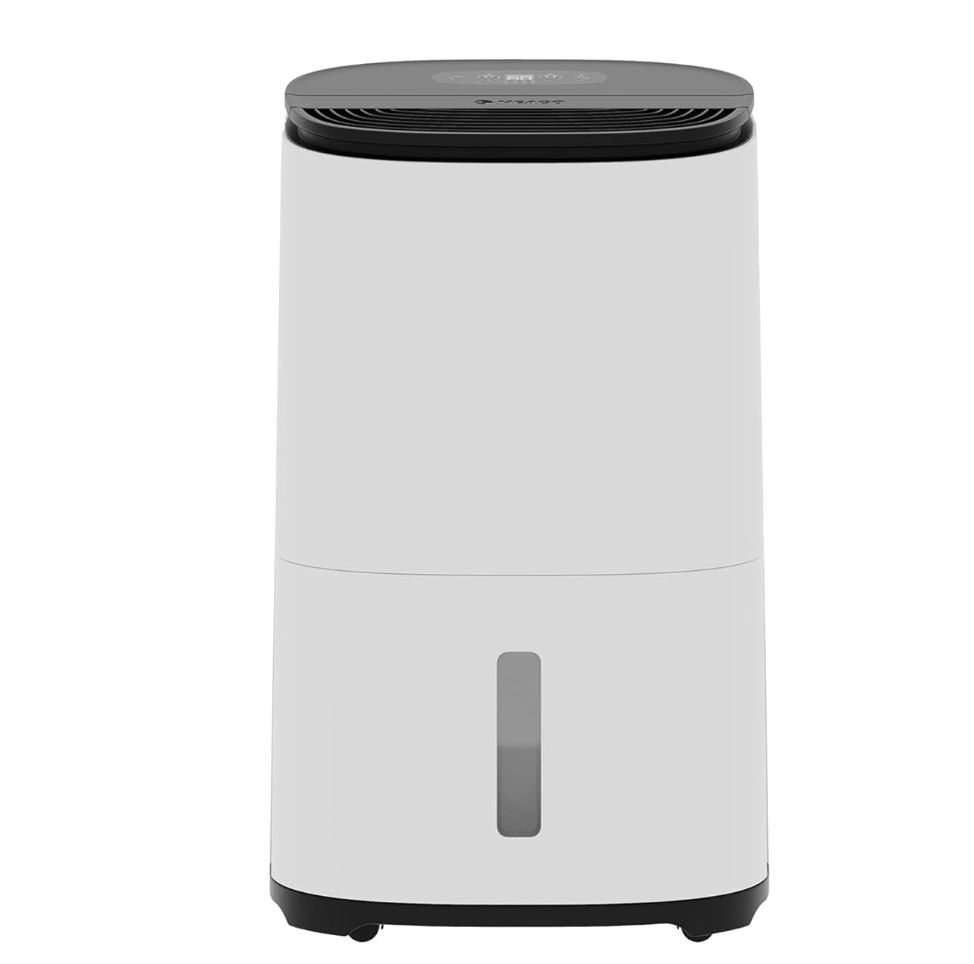 MeacoDry Arete One 12L
- Best for:
- Best for Flats / Smaller Homes
- Key strength:
- Quiet and efficient for typical smaller properties
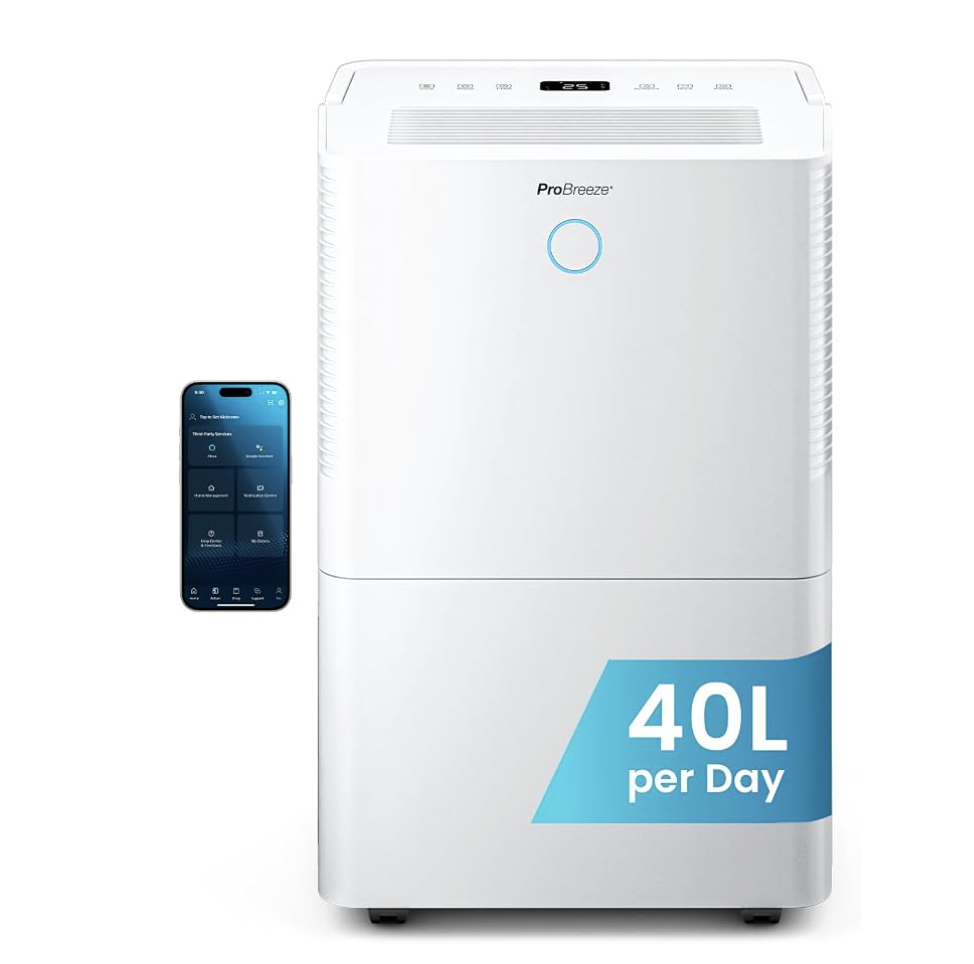 Pro Breeze 30L Smart PB-15-UK
- Best for:
- Best Smart / High Capacity
- Key strength:
- High extraction with connected controls
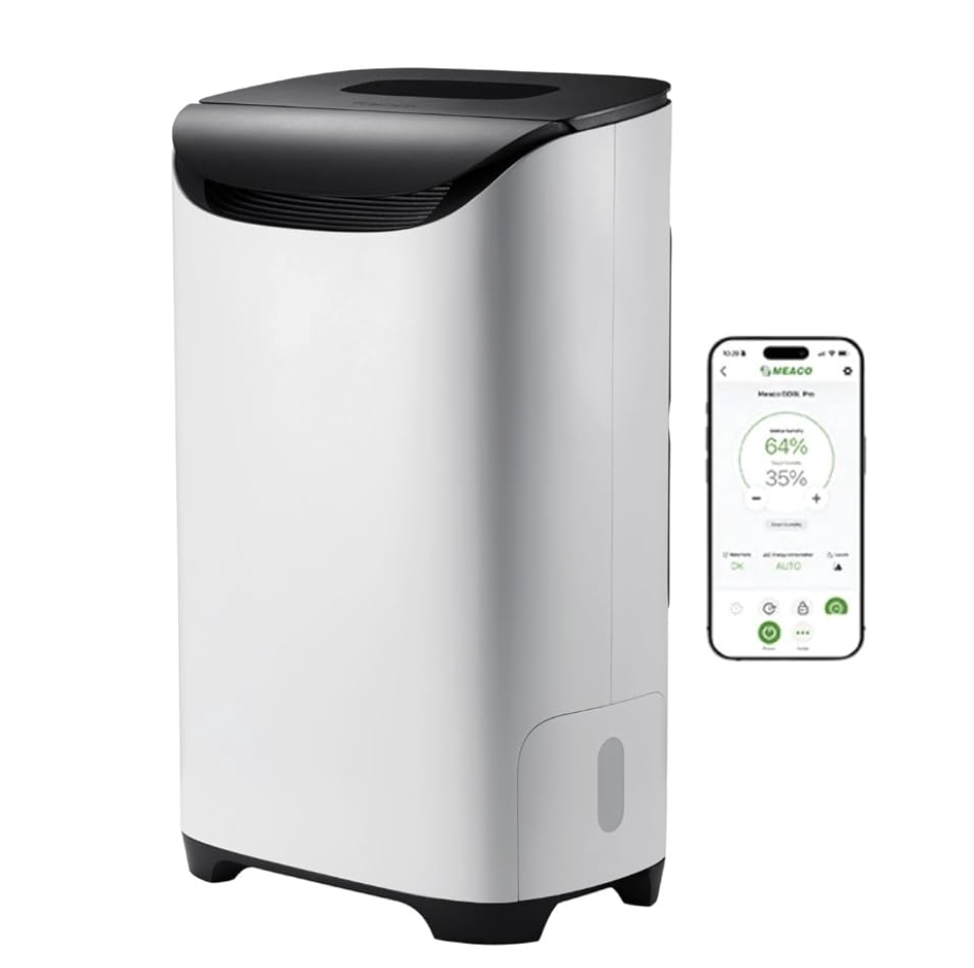 Meaco DD8L Pro
- Best for:
- Best for Cold Rooms / Garages
- Key strength:
- Desiccant performance in low temperatures
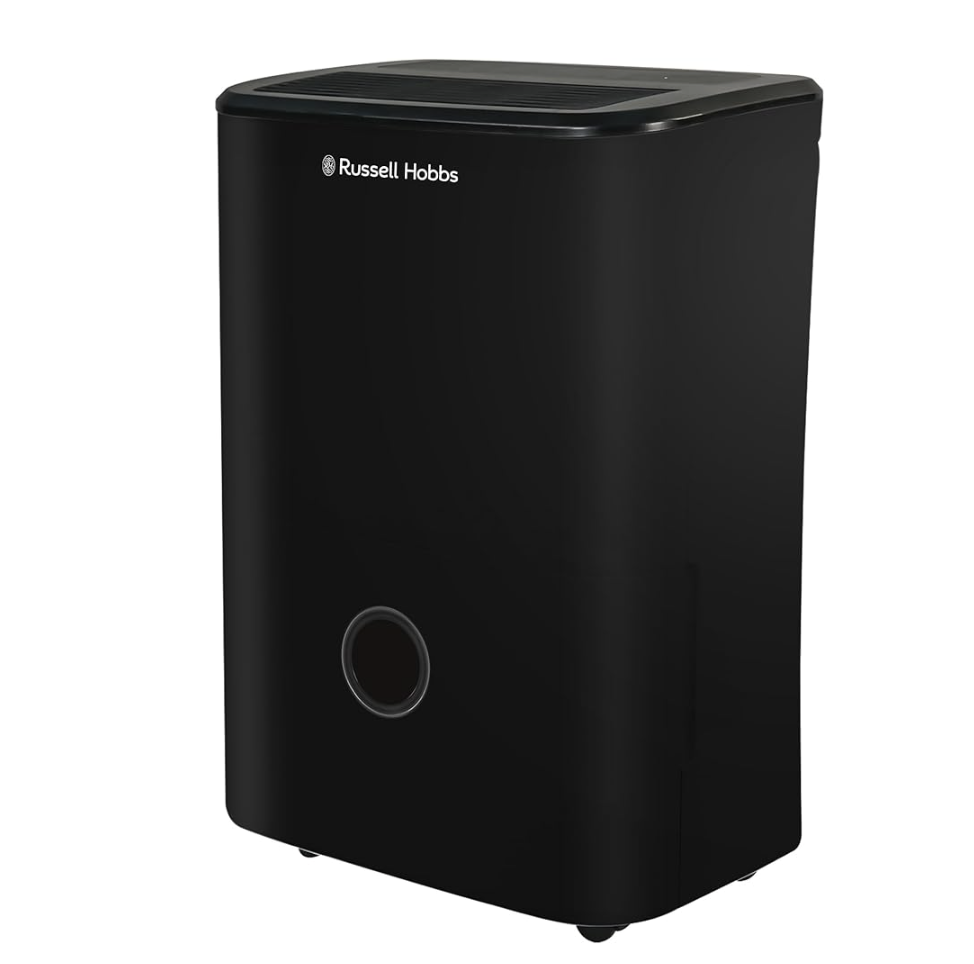 Russell Hobbs 20L RHDH2002
- Best for:
- Best Mainstream Alternative
- Key strength:
- Familiar-brand 20L option
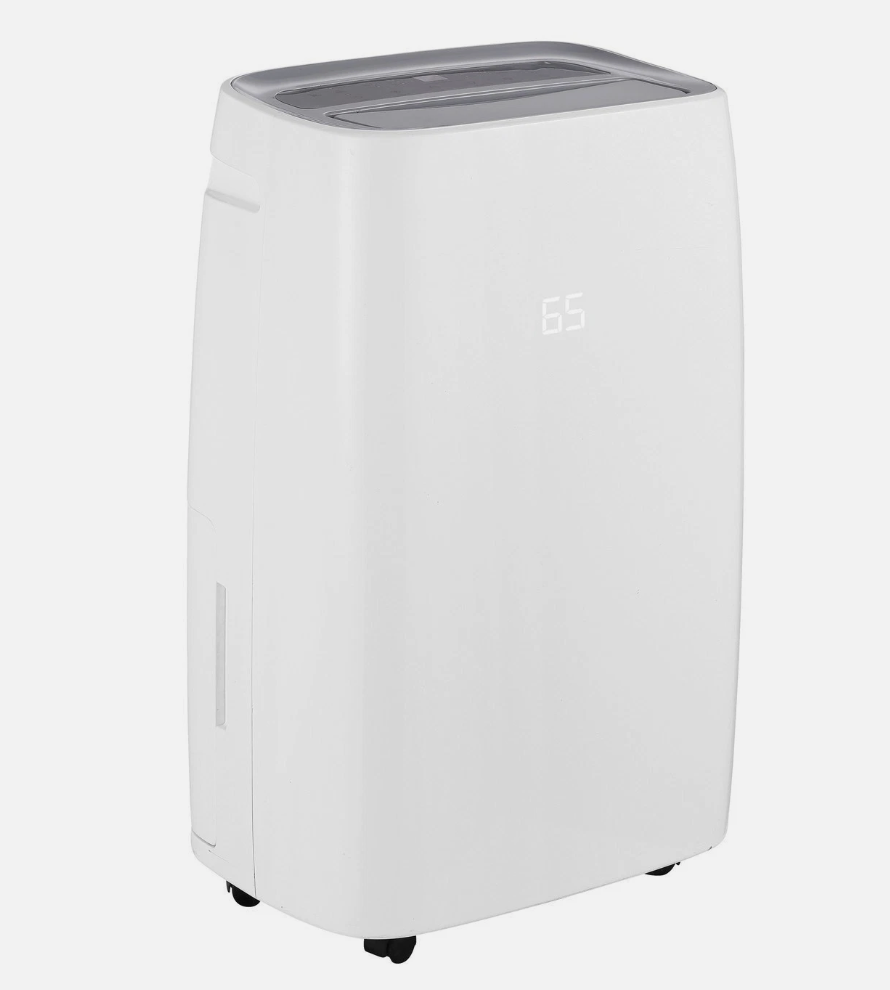 ElectriQ 40L Smart PD45E
- Best for:
- Best for Very Large Spaces
- Key strength:
- High-capacity option for larger areas
The seven best dehumidifiers
MeacoDry Arete One 20L
The Arete One 20L is our strongest all-round choice for larger UK homes. It combines strong moisture extraction with unusually quiet operation, automatic humidity control, dedicated laundry mode and Meaco’s long warranty, making it particularly easy to leave running as an everyday household appliance.
Key specifications
- Compressor dehumidifier
- Extraction capacity: up to 20L/day headline rating
- Laundry mode: Yes
- Continuous drainage: Yes
- HEPA filtration: Yes
- Automatic humidistat: Yes
- Warranty: 5 years
Pros
- Quiet for its capacity
- Strong whole-home performance
- Excellent warranty and UK support
Cons
- Premium purchase price
- Larger than compact 10–12L models
Pro Breeze 12L Low Energy PB-06-UK
The Pro Breeze 12L is a sensible choice for buyers who want proper compressor dehumidification without paying Meaco-level prices. It covers the core functions most households actually need and is particularly attractive for bedrooms, smaller flats and occasional laundry drying.
Key specifications
- Compressor type
- 12L/day headline extraction
- 2.5L water tank
- Laundry / continuous operation
- Timer
- Continuous drainage
Pros
- Lower purchase price
- Useful size for typical rooms
- Straightforward controls
Cons
- Less refined than premium models
- Shorter warranty/support proposition than Meaco
MeacoDry Arete One 12L
The Arete One 12L is arguably the sweet spot for flats, apartments and smaller houses. It is very quiet, energy efficient and includes both laundry mode and HEPA filtration without the bulk of larger 20–25L machines.
Key specifications
- Compressor type
- 12L/day headline capacity
- Noise: approximately 35–38 dB
- Power consumption around 151W at typical conditions
- 2.5L tank
- Laundry mode
- Continuous drainage
- 5-year warranty
Pros
- Very quiet
- Low running power
- Compact for a full compressor model
Cons
- Lower extraction than 20L models
- More expensive than budget 12L rivals
Pro Breeze 30L Smart PB-15-UK
The Pro Breeze 30L Smart is aimed at buyers who want significantly more extraction capacity plus remote control. It makes more sense in larger homes, utility areas or households with substantial indoor laundry loads than in a small flat.
Key specifications
- Compressor type
- 30L/day headline extraction
- Wi-Fi / smart control
- Laundry mode
- Automatic humidistat
- Continuous drainage
Pros
- High extraction capacity
- App connectivity
- Useful for large laundry loads
Cons
- Larger footprint
- Overkill for small rooms
Meaco DD8L Pro
The DD8L Pro is the specialist option on this list. Unlike compressor models, its desiccant system continues working effectively in colder environments, making it particularly useful for garages, boats, utility rooms, caravans and unheated spaces.
Key specifications
- Desiccant technology
- Extraction up to approximately 8L/day
- Operating temperature down to around 1°C
- Smart app control
- Laundry mode
- Smart Energy Mode
- Continuous drainage
- 3-year warranty
Pros
- Works well in cold spaces
- App control
- Excellent laundry performance
Cons
- Higher power consumption than compressor models
- Expensive if used only in a warm living room
Russell Hobbs 20L RHDH2002
The Russell Hobbs 20L is a straightforward mainstream alternative for buyers who prefer a familiar appliance brand. Its 20L headline capacity makes it appropriate for larger rooms and general household condensation control without stepping into specialist premium pricing.
Key specifications
- Compressor type
- 20L/day headline extraction
- Automatic humidistat
- Laundry / continuous mode
- Tank and continuous drainage
Pros
- Familiar UK brand
- Useful 20L capacity
- Straightforward everyday operation
Cons
- Fewer specialist features than premium rivals
- Check current seller/warranty details carefully
ElectriQ 40L Smart PD45E
The ElectriQ 40L Smart is the high-capacity choice for people dealing with genuinely large areas, substantial damp loads or utility-style applications. Most ordinary bedrooms do not need this much extraction, but larger spaces may benefit from the extra headroom.
Key specifications
- Compressor type
- Approximately 40L/day headline extraction
- Smart controls
- Continuous drainage
- Automatic humidistat
- Large-space positioning
Pros
- Very high extraction capacity
- Connected controls
- Suitable for larger spaces
Cons
- Bulky
- Unnecessary for most small homes
What to consider before buying a dehumidifier
Room size and extraction capacity
Match the machine to the space and the damp load. A 10–12L/day compressor model suits most flats and smaller homes, while 20L and above makes sense for larger houses, serious condensation or regular indoor laundry drying. Remember that headline extraction figures are measured at 30°C and 80% relative humidity — real-world extraction in a cool British home will be lower.
Compressor vs desiccant
Compressor (refrigerant) dehumidifiers are the default choice for heated living spaces: they extract more per watt in normal room temperatures. Desiccant models use a moisture-absorbing rotor instead, cost more to run, but keep working effectively in cold conditions where compressor models lose efficiency.
Operating temperature
If the machine will live in a garage, conservatory, caravan, boat or unheated utility room, check the minimum operating temperature. Compressor models lose efficiency below roughly 15°C and can stop extracting altogether in the cold; desiccant units typically keep working down to around 1°C.
Laundry drying
A dedicated laundry mode runs the fan and extraction continuously to dry clothes faster and keep that moisture out of your walls. If you regularly dry washing indoors, this feature alone can justify the machine — and it is generally cheaper per load than a tumble dryer.
Noise
Dehumidifiers run for hours at a time, so noise matters. For bedrooms and living rooms look for figures around 35–40 dB on lower settings; louder machines are better placed in hallways or utility rooms. Desiccant models have no compressor, but their fan noise is constant.
Running costs
Check the wattage before you buy: compressor models typically draw around 150–350W depending on capacity, while desiccant units can draw considerably more. An accurate humidistat that switches the machine off once your target humidity is reached makes a real difference to the electricity bill.
Tank size and continuous drainage
A tank of around 2.5L or more means fewer trips to empty it, and every machine stops when the tank is full. If you need round-the-clock extraction — or the unit will sit somewhere you visit rarely — look for a continuous drainage hose option so it can run unattended.
Humidistat and smart controls
An automatic humidistat lets you set a target humidity and leave the machine to manage itself — far more efficient than running it constantly. Wi-Fi app control adds scheduling and remote monitoring, which is genuinely useful for second homes, garages and utility spaces, but not essential for everyone.
Frequently asked questions
Match the extraction capacity to the space and the severity of the damp. As a rough guide, a 10–12L/day compressor model suits flats, bedrooms and smaller homes, while 20L or more makes sense for larger houses, serious condensation or regular indoor laundry drying. Headline figures are measured at 30°C and 80% relative humidity, so real-world extraction in a cool UK home will be lower — when in doubt, size up.